
Obby Chapters: Escape Games
Beos StudioAdventure
4.331.00 Reviews
- Version
- 0.71
- Installs
- 5.00M
- Age Rating
- Teen
Screenshots


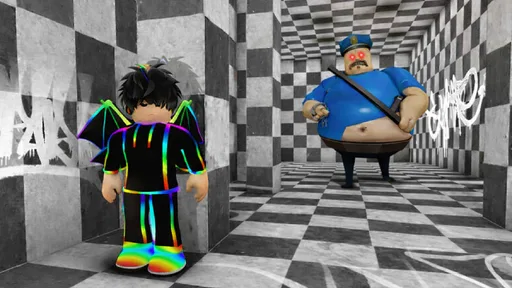



Our Review of Obby Chapters: Escape Games
 Analysis by Appyee
My first few minutes with Obby Chapters: Escape Games gave me a clear idea of its appeal: this is an adventure game built around movement, timing, and the feeling of getting out of a dangerous place one obstacle at a time. Developed by Beos Studio, it puts the player inside Barri’s prison, where each chapter turns a simple escape attempt into a sequence of traps, jumps, narrow routes, and secrets to uncover.
The game is free to start, carries a Teen content rating, and runs on Android 9 or later. Its current version is 0.71, so I approached it as a game that is still being refined rather than as a completely settled experience. That matters here because the enjoyment depends less on a complicated story and more on how consistently the controls, level layouts, visual cues, and pacing work together.
What I like most is that the prison setting gives the obstacle-course format a reason to exist. Instead of feeling like unrelated platforms floating in empty space, the chapters are framed as stages of an escape. The result is not a deep prison drama, but it does provide enough context to make each jump feel like part of a larger route. The strongest reason to try it is its focused mood: tense, playful, and easy to understand within seconds.
How the prison setting shapes the first impression
The opening impression is intentionally direct. You are not asked to learn a large collection of systems before playing. The central question is immediate: can you move through the prison without falling into its traps? That simplicity makes the game approachable for players who enjoy obstacle courses but do not want a long tutorial or a dense role-playing interface.
I found the chapter structure useful because it gives short sessions a natural stopping point. If I only had a few minutes, I could attempt a section, learn its timing, and put the game down without feeling that I had abandoned a huge quest. When I had more time, the same structure encouraged me to continue because finishing one part made the next escape step feel close.
The prison theme also changes how I read the level design. A wall, gate, corridor, or restricted-looking route feels more meaningful than a random decorative object. Even when the main activity remains jumping and avoiding hazards, the setting helps me understand why the path is narrow or why a route is blocked. That small amount of environmental logic is valuable in a genre where levels can otherwise blur together.
There is a trade-off, though. Players looking for a broad adventure with exploration, dialogue, puzzles, or character development may find the experience narrower than the word “adventure” suggests. The real focus is the obby format. The prison is the wrapper that gives the challenges identity; it is not a substitute for a large narrative campaign.
The game’s audience size suggests that the concept has reached a substantial group of players, with over five million installs and an average rating of 4.3. I would not treat those figures as a guarantee that every device or play style will feel perfect, but they do indicate that the basic escape-course idea has broad appeal. The review count shown in the store is much smaller than the rating count, so I would pay more attention to how the game feels on your own device than to any single short comment.
Why the visual language matters
The art direction works best when it helps me read a hazard before I commit to a jump. In an obstacle game, decoration is never merely decoration: a busy background can hide the edge of a platform, while a clear contrast between safe surfaces and dangerous areas can make a difficult section feel fair. I found myself judging the environment as a set of visual instructions, not just as scenery.
That is particularly important in a prison-themed game. Repeated structural elements can establish a shared visual vocabulary: enclosed spaces suggest pressure, barriers suggest progression, and hidden corners invite a closer look. The setting creates a sense of confinement while the act of moving forward provides the release. That contrast gives the game more personality than a collection of disconnected floating platforms would have.
Secrets also benefit from this approach. A hidden route is more satisfying when the environment quietly hints that the player should inspect an unusual opening or suspicious corner. My practical advice is not to rush through the center of every path. After learning the safe route, I would replay a section while checking side spaces and less obvious ledges. That approach turns a purely reactive obstacle course into a light exploration exercise.
At the same time, I would not assume that every visual detail is a clue. Some scenery exists to maintain the prison atmosphere, and treating every object as interactive can waste time. I learned to distinguish between shapes that affect movement and background elements that simply reinforce the setting. That distinction becomes more useful as the chapters become busier.
For younger players, the Teen rating is worth taking seriously even though the main activity is playful movement. Parents should look at the game themselves before handing it to a child, especially if the child is sensitive to a threatening escape setting or prefers calm puzzle games. The rating does not make the game unsuitable for every younger player, but it is a reminder that the tone is not designed as a purely gentle platformer.
Sound, pacing, and the feeling of a timed escape
Sound has a supporting role rather than taking over the experience. In a game like this, audio is most useful when it strengthens the rhythm of movement: entering a new section, approaching danger, recovering from a mistake, or reaching a successful checkpoint-like moment. Even without turning the volume up high, I found that the sound layer helped separate ordinary movement from moments that deserved attention.
The prison mood depends on restraint. A constant stream of loud effects would make every jump feel equally important, while a quieter presentation lets the environment carry some of the tension. The better sections are those where the visual setting and the audio cues agree about the pace. A cramped route should feel deliberate; a sequence of quick obstacles should encourage concentration rather than sightseeing.
That pacing is one of the game’s most important design choices. Obby levels can become frustrating when they demand perfect reactions immediately, but they can also lose energy when the player spends too long walking between meaningful challenges. Here, the escape framing gives the movement a forward purpose. I was not simply completing isolated jumps; I was trying to preserve momentum through a route that was designed to interrupt it.
My most useful rhythm tip is to stop treating every obstacle as a separate emergency. First, watch the movement pattern and identify whether the challenge asks for speed, patience, or a change in direction. Then attempt it with one specific goal. If I tried to improvise every action at once, I made more mistakes. If I learned the sequence as a short rhythm, the same section became much more manageable.
This is also where the game may not suit everyone. Players who want relaxing, low-pressure exploration may dislike the repeated need to retry a difficult passage. Conversely, people who enjoy fast reflex challenges may wish some parts moved more quickly. The prison atmosphere supports a measured build-up, but the balance between suspense and repetition will depend on how comfortable you are with learning by failure.
Making retries useful instead of repetitive
A failed attempt is most valuable when it answers a question. Did I jump too early? Did I follow the wrong visual cue? Did I try to maintain speed where the level wanted a pause? I recommend changing only one decision on each retry. That turns failure into a small experiment and makes progress easier to recognize.
Another practical habit is to divide a difficult chapter into visual landmarks. I might remember a particular corner, barrier, or change in floor pattern rather than trying to memorize the entire route. On the next attempt, I focus only on reaching the next landmark cleanly. This reduces the feeling that one mistake has erased all learning and makes long sections feel like a series of smaller problems.
Players using a phone should also consider how they hold the device. Obby games are more demanding when a finger covers the action area or when the player changes grip during a tense jump. I found it better to settle into one comfortable position before entering a difficult section. That sounds minor, but consistent hand placement can matter as much as knowing the route.
The free entry point makes experimentation easy, but the game includes optional in-app purchases ranging from $0.99 to $9.99 per item. I would treat those as convenience choices rather than part of the core reason to play. If you enjoy learning routes and improving through retries, spending is not necessary to understand the main appeal. If you dislike repeating sections, optional purchases may look tempting, but I would first decide whether the underlying movement feels satisfying.
Where the mechanics fit the atmosphere
The mechanics and setting complement each other because both emphasize controlled movement through restricted space. The prison is about barriers and escape; the obby format is about reading barriers and finding a way past them. That is a clean match. The game does not need an elaborate combat system to justify its world because the act of navigating danger already expresses the central idea.
I especially appreciate that the challenge can be understood visually. A player can look at a route, identify the likely landing area, and form a plan before moving. That makes the game feel more skill-based than luck-based. When I failed, I generally had a useful explanation for the failure, even if the correction required several attempts.
The secret-hunting layer adds welcome variety. Without it, the best strategy would be to follow the obvious path as quickly as possible. Looking for alternate spaces changes the player’s attitude: instead of seeing the chapter only as a test to survive, I began treating it as a place to inspect. This is one of the game’s more interesting trade-offs. Searching carefully can deepen the atmosphere, but it also slows the escape and may expose the player to more opportunities to make a mistake.
That makes the game suitable for two different moods. On one run, I can focus on completion and take the safest visible route. On another, I can replay a familiar section to investigate corners, compare approaches, and look for secrets. The same chapter therefore has a practical route and a curious route. Players who enjoy replay value through mastery and discovery will get more from it than players who expect every replay to reveal a completely new story.
The chapter format also helps the mechanics stay readable. A single enormous level could make it difficult to understand whether a problem came from the controls, the route, or simple fatigue. Breaking the escape into chapters gives the player mental resets. I could finish one style of obstacle, reflect on what went wrong, and approach the next section with a fresh plan.
Still, this is not the right choice if your ideal adventure game is built around collecting equipment, customizing a character, solving long dialogue puzzles, or freely roaming a large map. A conventional platformer may be better if you want more precise arcade action without the prison framing. A story-driven adventure may be better if narrative decisions matter more to you than movement mastery. This game earns its place by doing one thing with a recognizable mood, not by covering every adventure subgenre.
Who will enjoy it most
I would recommend it to players who like short challenge loops: enter a section, observe the hazards, attempt the route, learn from a mistake, and try again. It is also a good fit for someone who enjoys discovering small secrets inside a mostly direct level. The prison setting gives those actions a consistent purpose, while the chapter structure makes the game easy to pick up in spare moments.
It is less suitable for someone who becomes irritated by repeated failure or who wants a calm game that can be played without much concentration. A player looking for a deep cooperative adventure should also look elsewhere, because the appeal here comes from personal control and route learning rather than from a large social system. The free price removes the initial financial barrier, but it does not remove the need for patience.
For an everyday scenario, I can imagine playing it during a short break, finishing one obstacle sequence, and returning later with a clearer idea of the next attempt. I would not start a difficult chapter while distracted or while expecting to answer messages at the same time. The game rewards attention in small bursts, and a rushed attempt can feel worse than simply waiting until I have a few uninterrupted minutes.
Device compatibility is straightforward for Android users on version 9 or newer. Even so, I would test the controls and visual clarity on the actual phone or tablet I plan to use. Obstacle games are sensitive to screen size, touch comfort, and how easily the player can see the next landing point. A game that feels readable on a large display may feel more cramped on a smaller one, so personal comfort matters more here than the operating-system requirement alone.
My atmosphere verdict after playing
What stays with me is the consistency between the game’s subject and its play. The enclosed prison setting creates pressure, the obstacles turn that pressure into action, and the sound and pacing help the escape feel like a sequence rather than a pile of unrelated jumps. The art direction is most effective when it clarifies the route while preserving the sense that the player is moving through a place with rules and boundaries.
There are limitations. The focused obby design will feel narrow to players who expect a fully developed adventure world, and repeated attempts can become tiring when a section demands more patience than the player has that day. The game also asks the player to separate meaningful environmental clues from ordinary decoration, which may occasionally slow progress. Those are not deal-breakers for me, but they define the experience clearly.
Beos Studio has chosen a sensible foundation: make the escape readable, give the obstacles a setting, and let the player improve through observation. The result is more engaging than a generic obstacle course because Barri’s prison supplies a reason to keep moving and a mood to carry between challenges. I would begin with the free version, play several chapters at my natural pace, and decide afterward whether the atmosphere and retry loop hold my attention.
With over five million installs, an average rating of 4.3, and a Teen rating, it is easy to see why this adventure game has found an audience, but those details should be read alongside its focused design. If you want a compact escape-themed obby where visual reading, timing, and curiosity matter more than complex storytelling, this is worth trying. If you want a broad adventure with open exploration or a low-pressure experience, I would choose a different type of game instead.
My final recommendation is positive, with that distinction in mind. I enjoyed how the setting, sound, and pacing support the mechanics without overwhelming them. The best way to approach it is not as a one-time race to the finish, but as a sequence of small lessons: read the prison, find the rhythm, test the route, and return with a better plan. That is where the game’s atmosphere becomes playable rather than merely decorative.
Verdict
Strengths of Obby Chapters: Escape Games
- Varied escape challenges keep the gameplay from feeling repetitive.
- Bright, colorful visuals make the levels easy to navigate.
- Short stages are convenient for quick gaming sessions.
- Simple controls are suitable for younger and casual players.
- New chapters provide a sense of progression and discovery.
Limitations of Obby Chapters: Escape Games
- Some puzzles may feel too easy for experienced escape-game fans.
- Ads can interrupt the experience between levels.
- Certain obstacles rely more on timing than on problem-solving.
- The story is fairly light and offers limited character development.
- Performance may vary on older phones during busier stages.
Other Releases by Beos Studio
View All
+1 Speed Slime Escape
Arcade4.9
Similar Picks in This Category
View All
Roblox
Roblox Corporation4.2

Pokémon GO
Niantic, Inc.3.5

Ninja warrior: legend of adven
TOH Games4.6

Ninja Arashi
Black Panther4.6

Eyes - The Horror Game
Fearless Games sp. j.4.5

Critical Action:Gun Strike Ops
FPS Shooter & Action Game4.3
Frequently Asked Questions
What is Obby Chapters: Escape Games?
Obby Chapters: Escape Games is an obstacle-course adventure game built around escape-style challenges. Players move through themed levels, jump across platforms, avoid traps, solve simple environmental puzzles, and try to reach the exit safely. Each chapter introduces a different setting and combination of hazards, making the game suitable for players who enjoy casual platforming with a light suspenseful atmosphere.
How do you play Obby Chapters: Escape Games?
The main objective is to guide your character through each obstacle course without falling or being caught by hazards. You generally use on-screen controls to move, jump, and navigate around obstacles. Careful timing is important, especially when crossing moving platforms or avoiding traps. If you fail, you can usually retry the section and learn the level layout before attempting it again.
Is Obby Chapters: Escape Games suitable for children?
The game has simple controls and accessible obstacle-course gameplay, so it may be appropriate for children who enjoy platforming challenges. However, the escape theme, chase sequences, traps, or surprising moments may not appeal to every younger player. Parents should review the store rating, content labels, advertising, and any in-app purchase information before allowing children to download and play.
Can Obby Chapters: Escape Games be played offline?
Some parts of the game may work without a continuous internet connection, particularly when playing already available levels. Nevertheless, an internet connection can still be required for advertisements, analytics, updates, cloud features, or loading certain content. Because offline availability can change between versions and devices, it is best to test the game after installation rather than assuming every chapter will work without internet access.
Is Obby Chapters: Escape Games free to download?
Obby Chapters: Escape Games may be available as a free download, but free access does not always mean the experience is completely without costs. The game can include advertising, optional purchases, or other monetization features depending on the platform and current version. Before downloading, check the official Google Play or App Store listing for pricing, permissions, age rating, and purchase details.
Play our best games!


